Why the Yen Intervention Only Buys Japan Time?
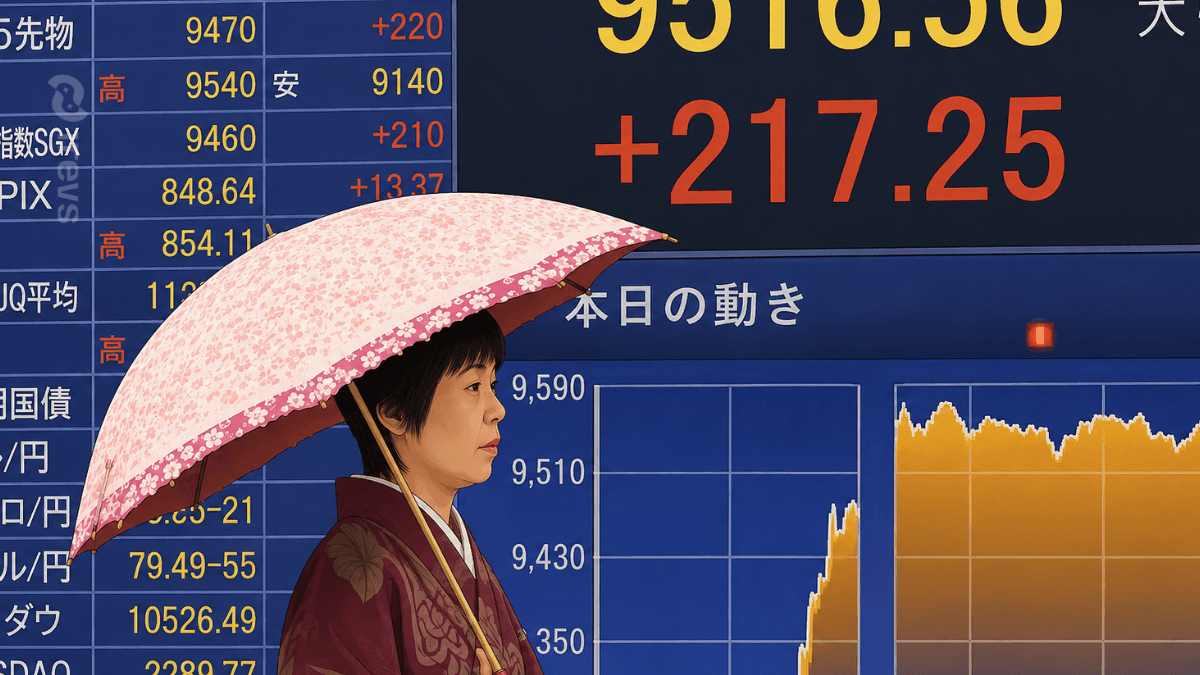
Japan's Ministry of Finance stepped back into the currency market this week for the second time this year, spending an estimated JPY 8 trillion, worth about $54bn, on Thursday and a further JPY 5 trillion, worth roughly $34bn, on Friday. Recently, the Japan and US Confirm Joint Yen Purchase episode moved into a new phase when Washington joined in, selling part of its euro reserves to support the yen alongside Tokyo. That kind of direct US involvement has historically shown up only during severe market stress.
The combined move, plus a short-covering scramble among traders caught on the wrong side of the yen, pulled USD/JPY down close to five percent from cycle highs near 164 to as low as 155, before the pair drifted back up toward 157. The pattern echoes the 2024 intervention rounds almost exactly, with one notable gap. Unlike July of that year, the Bank of Japan met on Friday and did not back the intervention with the kind of hawkish signal that convinced markets a policy shift was coming.
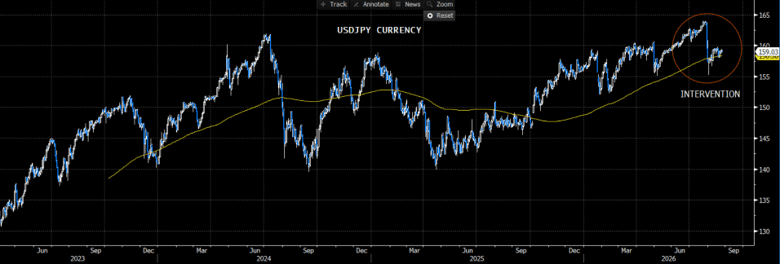
The timing, landing just after the Federal Reserve's own meeting and alongside the Bank of Japan's, suggests officials chose to lean into a period of dollar softness rather than fight the market head on.
Will This Actually Turn the Tide?
Currency interventions, even coordinated ones, rarely reverse a trend on their own. They tend to work in one of two situations: reining in excessive volatility, which was not really the issue here given how calm the yen had been trading, or snapping an exchange rate back toward its underlying fundamentals when it has drifted too far from them. In practice, yen interventions function mostly as a way to buy time until the economic backdrop shifts in the currency's favor.
What makes this round different is that the latest leg of yen weakness has closely tracked a widening gap in nominal and real yields between Japan and the United States. Unless that spread starts to narrow, any strength the yen gains from this week's action is likely to prove short-lived.
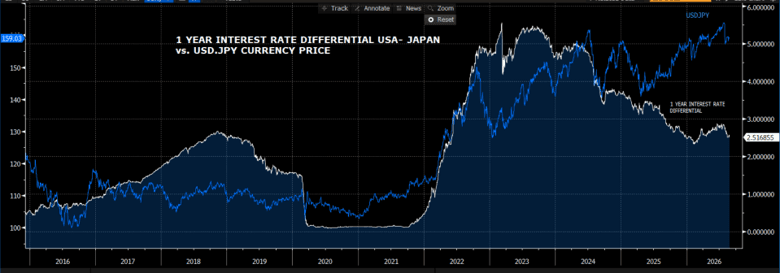
The core problem remains the Bank of Japan falling behind the curve on inflation. The conditions for a more meaningful tightening cycle are building, but markets are still waiting for clearer signals before pricing that in. US Treasury Secretary Scott Bessent has said publicly that he expects Tokyo to follow the intervention with real policy action, yet the Bank of Japan let Friday's meeting pass without taking that step.
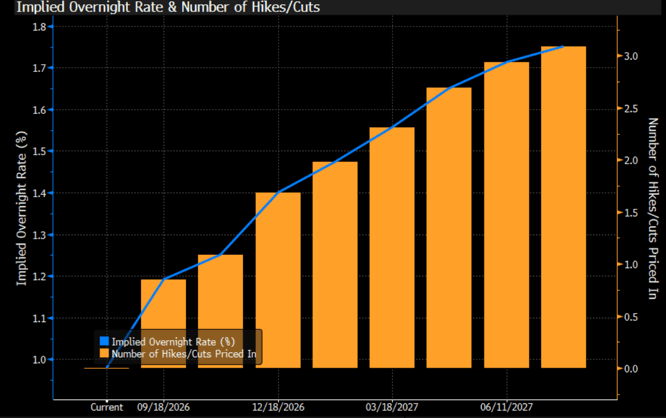
The yen looks to be in the later stages of its multi-year bear market, with the odds of a policy pivot from Japan rising. That does not rule out further bouts of weakness before year end, particularly with tension around the Strait of Hormuz still unresolved and US growth staying resilient enough to keep real yields elevated. A Canadian Dollar Gains as US-Iran Strikes Pause style de-escalation would ease some of that pressure, but the region remains fragile enough that a reversal cannot be ruled out. This particular round of intervention has likely run its course for now, though another attempt becomes more likely if the yen slides back toward fresh lows.
Japan Still Has Ammunition, but It Is Not Unlimited
Japan held about $1.28 trillion in total international reserves at the end of June. Of that, foreign-currency reserves, the pool actually used to fund intervention, make up roughly $1.1 trillion, with close to $1 trillion of it sitting in foreign securities rather than cash. Japan has relied entirely on selling those securities to fund its interventions in recent years, since its FX deposits have stayed largely flat.
The April-May intervention round cost an estimated $73bn, and this latest round added a further $88bn on top of that. Combined, that is roughly $160bn spent this year, or about 15 percent of Japan's total FX reserves. There is still meaningful firepower left, but it is not infinite, and the yen is the third most heavily traded currency in the world, with daily turnover near $1.6 trillion. Fighting the prevailing trend in a market that size only works for so long.
There is also a structural limit worth noting. The International Monetary Fund's rules for maintaining a free-floating currency classification allow no more than three intervention episodes within any rolling six-month window, which puts a hard ceiling on how often Tokyo can repeat this playbook regardless of how much reserve capacity remains. Repeated interventions that fail to hold also carry a reputational cost, since markets can start to focus more on a shrinking reserve pile than on the intervention itself.
Why Washington Got Involved
The April-May intervention round coincided with Japan selling more than $60bn in US Treasury securities, concentrated mostly in short-term T-bills, a type of government debt that matures in under a year. That stock is limited though. Japan held only $93bn in T-bills at the end of May, out of more than $1.1 trillion in total US securities holdings.
The bigger concern for US officials was likely the risk of that selling spilling over into longer-dated Treasurys. A rapid sale of longer maturities by the largest foreign holder of US government debt could have added fuel to an already uncomfortable rise in long-end yields, a dynamic that has been closely tied to broader questions about Why the July Jobs Report Could Shift Wall Street heading into the back half of the year.
The Treasury's continued push to expand the Fed's FIMA repo facility, a mechanism that lets foreign central banks borrow dollars against their Treasury holdings without having to sell them outright, points the same direction. Officials appear to prefer tools that avoid outright bond sales wherever possible.
Given how small US FX reserves are in comparison to Japan's, Washington's role here was largely symbolic: coordinating the effort, limiting spillover risk, and lending the intervention more credibility than Tokyo could manage alone. Bessent's public comments and the visibility around the US side of the trade reinforce that reading. A weaker dollar also lines up with the administration's broader economic goals. Supporting the yen, which tends to lift the wider Asian currency complex with it, fits the stated aim of reshoring manufacturing and narrowing trade gaps, themes that have also shaped market reaction to recent sessions where Dow Rises, Nasdaq Slips as Oil Drops Before Fed Decision headlines dominated trading desks.
A More Assertive Approach to US Currency Policy
Direct US currency intervention is historically rare and has typically required something close to a genuine crisis, such as the joint 1998 intervention to prop up the yen during the Asian financial crisis, or the coordinated G7 action in 2011 to weaken the yen after the earthquake and Fukushima Daiichi disaster. The yen may be undervalued today, but this episode does not come close to that level of severity.
That points to a Treasury leadership team more willing to take direct action in currency markets than its predecessors, consistent with a broader pattern from the current administration. This intervention follows an activist stretch of US currency policy that has already included support for the Argentine peso last October and a January round of yen rate checks that originated in Washington rather than Tokyo.
Perhaps the most striking detail of this episode is that the euro was the funding currency for the US side of the trade, apparently with limited coordination with European authorities beforehand. The European Central Bank, which is fighting many of the same imported inflation pressures as everyone else, is unlikely to welcome its currency being sold off as a byproduct of US policy while Washington works to shield the dollar from the same treatment.
The choice adds to a pattern of friction between the US and Europe under the current administration. European officials may increasingly view Washington less as a predictable partner and more as a transactional actor willing to use other currencies to hit its own targets. That perception could accelerate the gradual move toward reserve diversification already under way, even if the pace stays measured to avoid triggering further volatility that could ultimately work against Europe as well.
What This Means for Positioning
The Bank of Japan falling behind on inflation remains the central reason for yen weakness, and a genuine policy shift is needed to lift short-end real yields enough to support the currency in a durable way. The domestic conditions for that pivot are building, but given the central bank's cautious history and the political pressure it faces, waiting for firmer signals before committing capital makes sense.
Short-term timing remains difficult to call, and this still looks like a market better suited to tactical trades than long-term conviction bets. The odds of USD/JPY climbing back above 160 before year end look reasonably high, given that real yields continue to move against the yen and the risk of renewed energy price spikes tied to Middle East tensions has not gone away.
Following the recent pullback, there is no obvious catalyst for a fresh leg of dollar weakness either. Ongoing geopolitical risk, resilient US growth, and strong equity inflows all argue against a sharp breakdown in the greenback. Yen shorts positioned against other low-yielding currencies exposed to similar dynamics look more attractive than an outright long yen position right now. A short CHF/JPY trade, in particular, earns positive carry while still preserving exposure to any sudden bout of yen strength.
The long-term case for yen appreciation still holds up. A real-yield based fair value model points to a cyclical fair value for USD/JPY closer to 130, a long way from where the pair trades today. Getting there depends almost entirely on the Bank of Japan closing the policy gap it has left open for years, not on how many more times Tokyo and Washington are willing to step into the market together.
This content is for informational and educational purposes only. It is not financial, investment, or trading advice. Always do your own research (DYOR) and consult a licensed financial adviser before making any investment or financial decision.