US Stocks Hold Steady as Oil Falls Before Fed Decision
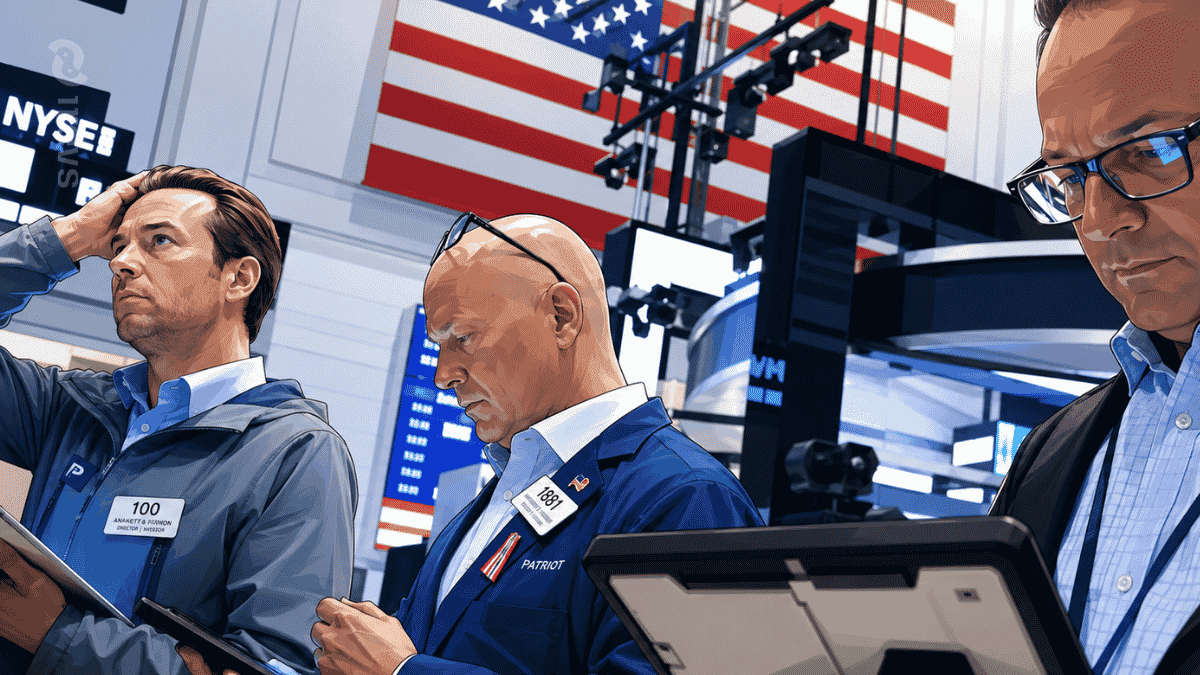
Wall Street closed mixed on Monday as oil prices fell sharply and investors prepared for the Federal Reserve’s latest interest-rate decision.
The S&P 500 gained less than 0.1%, while the Dow Jones Industrial Average rose 0.5%. The Nasdaq Composite slipped 0.2%, marking its fourth consecutive decline as Nvidia shares fell 5%.
Oil Prices Retreat From Recent Highs
Brent crude for October delivery fell 6.3% to settle at $85.87 a barrel after moving above $100 during the previous week.
The earlier surge followed escalating conflict between the United States and Iran, which disrupted traffic through the Strait of Hormuz and raised concerns about global energy supplies. A pause in direct attacks reduced some of that immediate risk and pushed oil lower.
Cheaper crude could ease inflation pressure, although changes in wholesale prices do not immediately reach consumers. Fuel, freight, and production costs can remain elevated as prior increases work their way through supply chains.
Investors are also assessing how higher oil prices can affect investment portfolios, particularly when energy shocks influence inflation, interest rates and consumer spending.

Federal Reserve Decision Takes Centre Stage
The Federal Reserve’s two-day policy meeting concludes on Wednesday, 29 July. Its policy statement is scheduled for 2:00 p.m. Eastern Time, followed by a press conference at 2:30 p.m.
Markets had assigned roughly a 36% probability to a rate increase. Investors will focus on whether policymakers believe higher fuel costs and tariffs could keep inflation elevated.
A rate increase or more restrictive guidance could pressure equities by raising borrowing costs. A decision to hold rates with a less aggressive outlook could provide support.

Chip Stocks Weigh on the Nasdaq
Technology shares delivered a divided performance. Nvidia fell 5%, and Micron Technology declined 2.3%, while Microsoft gained 1.9% and Apple advanced 1.2%.
Because these companies carry substantial weight in major indexes, sharp moves in individual shares can influence the wider market even when performance elsewhere is relatively stable.
Micron’s decline followed a volatile period for semiconductor shares after its previous earnings beat lifted US stock futures.
Communications and payment companies performed better. Alphabet, Charter Communications and Comcast advanced, while American Express, Capital One, Visa and Mastercard also ended higher.

Major Earnings Could Set the Next Direction
Investors are preparing for results from Sherwin-Williams, Boeing and Visa, followed by reports from Microsoft, Amazon and Apple.
The market will examine whether consumer demand is weakening under pressure from higher fuel, borrowing and import costs. Technology companies will also face questions about whether their earnings growth justifies current valuations and continued artificial-intelligence spending.
The 10-year Treasury yield fell to 4.65% from 4.69% at Friday’s close as investors positioned ahead of the Fed decision.
The move comes as major funds reconsider their allocations between asset classes, following warnings about a possible $165 billion rotation from equities into bonds.
