UK Lords Debate Bill Banning Crypto Donations
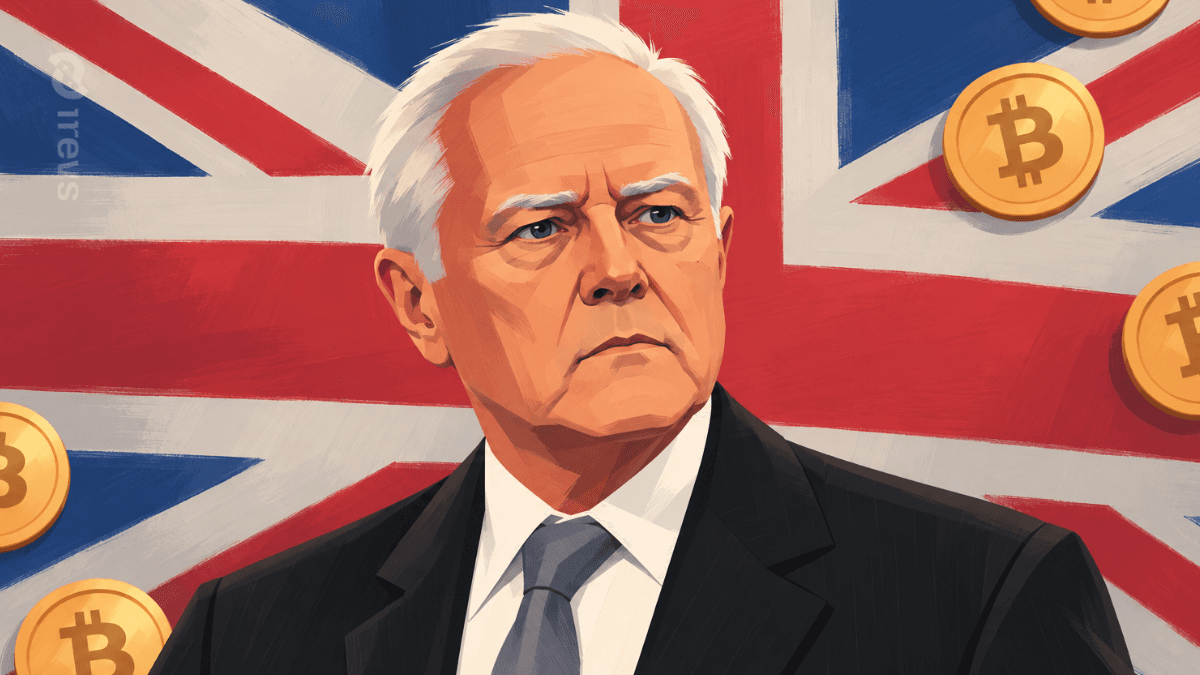
The House of Lords opened debate on September 14 on a bill that would cap foreign political donations and ban political parties from accepting cryptocurrency contributions, days after Reform UK received 72 million pounds ($97 million) from two cryptocurrency billionaires, the largest single donations in British political history.
The debate matters because it puts crypto donations at the center of a wider fight over how British elections get funded, right as scrutiny of Reform UK's finances intensifies from several directions at once.
A Record-Breaking 48 Hours
Ben Delo and Christopher Harborne, both British men who have spent years living abroad, each gave Reform UK 36 million pounds within two days, according to the Electoral Commission, which tracks political donations. The pair now jointly hold the record for Britain's largest single donation, surpassing the previous record of 10 million pounds that businessman John Sainsbury gave to the Conservative Party in 2023.
What the Bill Would Do
The Representation of the People Bill, which already cleared the House of Commons, would cap donations from British citizens living overseas at 100,000 pounds a year, backdated to March 25, and ban parties from accepting cryptocurrency as a donation outright. It reached its second reading in the House of Lords on Monday.
Lords Raise Concerns
Sharon Taylor, a Labour minister for local government, said crypto assets make it hard to trace who is really behind a donation.
"That creates a risk that malign actors, including state actors, could seek to obscure the origin of the funds," Taylor said.
Jonathan Evans, a nonpartisan lawmaker and former head of MI5, backed the ban and said cybercriminals favor crypto for ransom payments precisely because it is hard to trace. He also called for a cap on trade union donations, so no single funding source could tilt an election toward one party.
Former Conservative Prime Minister Theresa May said the bill leaves a loophole. It would bar crypto donations to parties but not to individual candidates, and it does not address how donors could convert crypto into cash through exchanges before giving it away. Tracing gaps like this one are a recurring theme in crypto compliance work across other high-risk markets, where AML and KYC checks exist largely to close the same kind of hole.
Farage Pushes Back
Reform leader Nigel Farage said the donations broke no laws. "You cannot confiscate money that has been given legally within the law as it stands," he said. He warned that if Labour pressed ahead with retroactive restrictions, Reform would push to limit trade unions' ability to fund the Labour Party.
Delo, who co-founded the BitMEX cryptocurrency exchange, was convicted in the United States in 2022 of failing to guard against money laundering at the exchange. He was sentenced to 30 months of probation and fined $10 million after the US Justice Department found the exchange's lax controls let sanctioned customers, including people in Iran, trade on the platform. Trump pardoned Delo in March 2025.
Paul Nowak, general secretary of the Trades Union Congress, rejected comparisons between union funding and Reform's donors. "Let no one tell you there is any similarity between care workers chipping in a few quid a year through their union and a party bought and paid for by billionaires," Nowak told the union federation's annual conference in Brighton on Monday. According to the Electoral Commission, Labour received 12 million pounds from trade unions in 2024 and 5 million pounds in 2025.
Scrutiny Beyond the Bill
Reform UK's donations have separately drawn police attention. London's Metropolitan Police opened a criminal probe into the party's finances over donations linked to Fiona Cottrell and her son George Cottrell, a former Farage aide previously convicted of financial crimes in the United States. Parliament's standards watchdog is separately investigating whether Farage failed to declare a 5 million pound gift from Harborne around the 2024 general election.
The fight over disclosure isn't unique to Britain. In the US, the revised CLARITY Act draft has added its own crypto ethics rules barring senior officials from crypto payouts, part of a broader pattern of lawmakers tightening the rules around political and public exposure to digital assets.
Next Steps
The House of Lords will continue debating the bill in the coming weeks before it moves to a formal vote.
This article was provided by a third party. iRevs does not endorse third-party content and is not responsible for its accuracy or for any product, service, or company mentioned. Readers should do their own research (DYOR).
