Senate CLARITY Act Draft Adds Crypto Ethics Rules
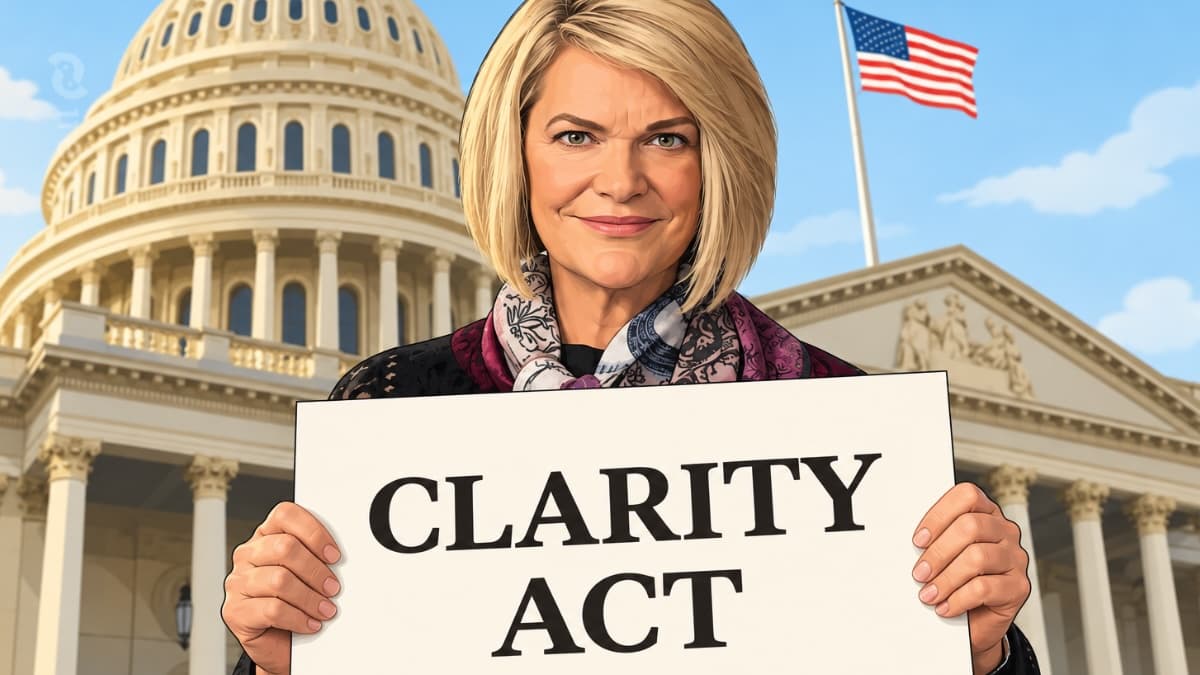
Senate Republicans released a revised draft of the CLARITY Act this week, merging market structure provisions previously handled across separate committees into a single text alongside new ethics and exchange rules. The updated bill language keeps the core split of oversight between the SEC and CFTC intact, while adding tougher restrictions on government officials and crypto exchanges.
The revision matters because it signals where Senate negotiators have landed on two of the bill's most contested points: conflicts of interest involving elected officials, and how stablecoin issuers can reward holders. Both had been sticking points slowing the legislation's path toward a floor vote.
New Ethics Rules Target Officials
The draft adds a dedicated ethics section covering senior government officials, elected politicians, and their spouses. Under the new rules, covered individuals could no longer accept payments to issue or sponsor a digital asset. Anyone with a material financial interest in a crypto company would generally have to sell that interest or place it in a blind trust.
State attorneys general would have the authority to enforce the restrictions. Violations carry a penalty of at least $500,000 or 20% of the money or financial interest involved, whichever is higher. Exchanges would also be barred from listing any asset issued or sponsored in violation of the ethics rules.
Stablecoin Rewards Get a Temporary Backstop
The previous draft already blocked stablecoin issuers from paying interest simply for holding the token, while still allowing reward payments tied to loyalty programs and similar mechanisms. The revised text keeps that structure but adds a new, time-limited power: the Treasury secretary could restrict stablecoin rewards if they trigger substantial deposit withdrawals from community banks. That authority would expire 18 months after the bill passes, meaning it functions as a temporary safeguard rather than a permanent ban.
Developer Protections Expand as Exchange Limits Tighten
The bill extends legal protections to software developers who don't control customer funds, and applies the same protection to miners and validators, shielding them from being classified by default as money transmitters or financial institutions. For stablecoin issuers already navigating oversight under the GENIUS Act, the revised draft adds further detail on how that regulatory relationship works.
Exchanges face new conflict-of-interest rules limiting proprietary trading on their own platforms, with exceptions carved out for hedging, default handling, and situations where liquidity provision is necessary. Existing state consumer protection, fraud, and anti-money laundering laws would continue to apply on top of the new federal framework, an approach that echoes recent moves like the SEC's proposed transfer agent rule overhaul for tokenized securities.
Anti-CBDC Section Dropped as Standalone Text
The Anti-CBDC Surveillance State Act, included as a separate title in the June Senate version, does not appear as a standalone section in the new draft. The bill's introductory language still references restrictions on central bank digital currencies, but the earlier anti-CBDC provisions are no longer reflected in the operative text. An unrelated housing measure, the Build Now Act, was also removed from the draft.
This article was provided by a third party. iRevs does not endorse third-party content and is not responsible for its accuracy or for any product, service, or company mentioned. Readers should do their own research (DYOR).
