Why Dangote's Refinery IPO Could Reshape African Investing
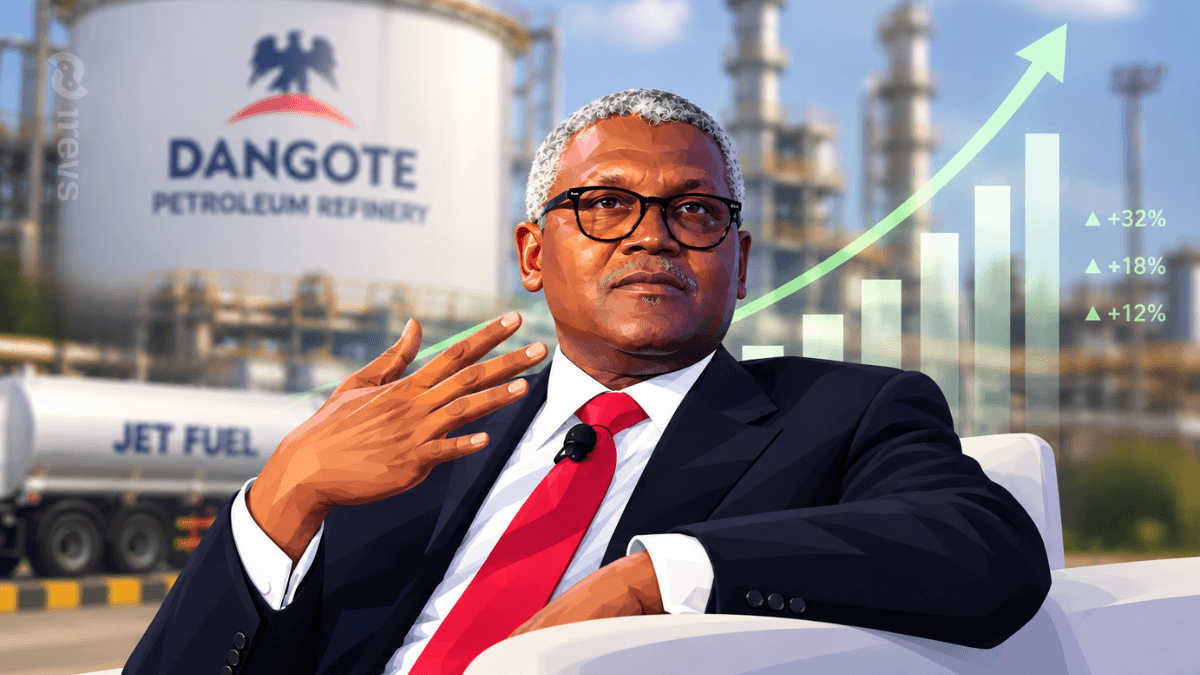
Aliko Dangote built the world's largest single-train refinery to prove Africa could industrialize on its own terms. The bigger test may turn out to be a different one: whether a continent that taught itself to bank on a mobile phone can now teach itself to invest on one.
On September 14, 2026, Dangote Petroleum Refinery will open its order book on the Nigerian Exchange, offering 4.1 billion shares at ₦525 ($0.40) each in a bid to raise more than ₦2.15 trillion. Nigeria's Securities and Exchange Commission cleared the offer earlier this month, along with a 15% greenshoe option that lets the company sell additional shares if demand runs hot. On paper, that makes it one of the largest public offerings in African history. The more interesting number is Dangote's stated target of 10 million shareholders, drawn not just from Nigeria's institutional investor base but from ordinary citizens across the continent and its diaspora.
A Minimum Buy-In Priced Like Street Food
For decades, African stock markets have been effectively closed to most people who aren't already wealthy. Opening a brokerage account required paperwork, a bank relationship, and often physical proximity to a stockbroker's office in a major city. None of that was an ideological choice by exchanges. It was logistics, and logistics is exactly what Africa's fintech sector spent the last decade solving for payments.
The refinery IPO sets its minimum subscription at 10 shares, or roughly ₦5,250 ($4.00), a price point deliberately pitched below the cost of a taxi ride in Lagos. Beyond the traditional banks and brokers handling the offer, Dangote Group has onboarded a wide bench of African fintechs and mobile money operators to distribute shares, including Flutterwave, Moniepoint, Paga, PiggyVest, Cowrywise, Trove Finance, and MTN's MoMo, alongside brokerages like Chapel Hill Denham and Afrinvest. The logic is straightforward: hundreds of millions of Africans already know how to send, save, and pay through an app. Extending that same interface to buying equity isn't a technological leap, it's a distribution decision.
That distribution strategy sits inside a broader shift already under way in African fintech, where startups raised $2.10 billion through the first eight months of 2026, much of it funneled into payments infrastructure that could plausibly double as investment rails.
From Sending Money to Owning Assets
Africa's fintech story has mostly been told as a financial inclusion story: getting people who never had bank accounts onto digital rails so they can send and receive money. Inclusion, on its own, has a ceiling. A person who can receive a transfer digitally but has no route into asset ownership stays on the edges of the financial system regardless of how many payments they make.
The Dangote offer is a test of whether that ceiling can be broken with existing infrastructure rather than new institutions. The pitch is that mobile money and fintech apps, already trusted for day-to-day transactions, can become the on-ramp for savings, investment, and eventually generational wealth. If that progression holds even loosely, a retail investor buying 10 shares and an institution buying a million shares end up in the same market, under the same rules, at the same price. That symmetry is the part of the offer that's genuinely new for African capital markets, not the size of the raise itself.
Why the Timing Isn't an Accident
The refinery IPO lands after an 18-month run in which African capital markets have already been outpacing global peers in dollar terms. Safaricom and M-PESA Africa's Zidi Money Market Fund, built with the Nairobi Securities Exchange, already showed that a mobile money base could be converted into fund investors at scale in Kenya. Dangote's offer applies the same underlying bet to a single, high-profile industrial asset instead of a diversified fund, which raises the stakes considerably. A money market fund spreads risk across instruments. A single-company IPO does not, and retail investors drawn in through a familiar payments app may not fully register that difference.
Nigeria's SEC has already had to intervene once this year. In June, the regulator warned operators running unauthorized campaigns that solicited advance subscriptions before any formal IPO application existed, and ordered the promotions stopped. Dangote Refinery said it had not sanctioned those campaigns. That episode is worth keeping in view as fintechs and mobile money platforms take on a bigger role in distributing equity products going forward: the same interface that makes investing accessible also makes it easy to market before regulatory clearance exists.
What a Successful Mass-Retail IPO Would Signal
If the offer pulls in anywhere close to its 10 million-shareholder target, the more durable outcome may not be about Dangote Group at all. It would be evidence that African stock exchanges can function as genuine engines of domestic capital mobilization rather than venues mainly used by pension funds, banks, and foreign institutions. A large, successful retail base created through this offer could make it easier to distribute shares in banks, telecoms, energy firms, and eventually startups graduating into public markets, using the same fintech and mobile money rails already built for the Dangote offer.
That would mark a shift in what African capital markets are actually for. Historically, IPOs on the continent have primarily been fundraising events for the issuing company. A mass-retail structure like this one reframes the exchange itself as a public institution, one where the entry price is measured against a plate of jollof rice rather than a brokerage account minimum.
The Risks Retail Investors Should Weigh
None of this changes the basic mechanics of equity risk. A single-stock retail investment tied to refining margins, crude oil price swings, and naira volatility carries meaningfully more risk than a diversified fund, and a low minimum buy-in doesn't change that math for the investor holding the shares. Retail investors drawn in through a mobile money app they trust for everyday payments may not have the same risk literacy as investors who came in through a traditional brokerage relationship. The involvement of dozens of fintech distribution partners also means due diligence and investor education responsibilities are now spread across a much wider set of companies than a single listing agent, which is a coordination challenge regulators and platforms will need to manage as the subscription period runs.
The Bigger Question
Whether or not the refinery hits 10 million shareholders, the offer has already answered a narrower question: African fintech and mobile money infrastructure is now sophisticated and trusted enough to be tested as investment infrastructure, not just a payments layer. What happens over the coming weeks, as the order book fills and shares begin trading, will determine whether that infrastructure can carry the weight of turning consumers into shareholders at scale, or whether Africa's largest IPO ends up being remembered mainly for its size rather than who ends up owning it.
This content is for informational and educational purposes only. It is not financial, investment, or trading advice. Always do your own research (DYOR) and consult a licensed financial adviser before making any investment or financial decision.
