Why Bitcoin Miners Are Chasing Nvidia's AI Capital Wave

Nvidia's $20B Bond Play and the Bitcoin Miners Quietly Betting on AI
Nvidia is heading to the debt markets in a significant way, and the timing points directly at where investment capital is currently flowing.
The chipmaker is preparing a multi-part bond offering of at least $20 billion across seven maturities ranging from two to 30 years. The longest-dated bonds are expected to price roughly 0.9 percentage points above comparable US Treasury securities. Proceeds are earmarked for AI-related investment and refinancing existing debt, Nvidia's first significant bond offering since 2021.
Nvidia's Global Footprint Keeps Growing
The bond offering follows a period of expanding international partnerships for Nvidia. CEO Jensen Huang's recent visit to South Korea produced agreements with SK Hynix, Naver, SK Telecom, Doosan Group, LG Group, and Hyundai Motor Group, spanning memory chips, AI data centers, robotics, mobility systems, and industrial AI. As the dominant supplier of GPUs used to train and run large language models, Nvidia's financing decisions carry weight across the broader AI ecosystem.
[EMBED: Insert /embed with a verified financial news account's tweet confirming Nvidia's bond offering terms here.]
Bitcoin Miners Are Making the Same Bet
Bitcoin mining companies control assets AI infrastructure needs directly: large power capacity, existing data center footprints, and long-term energy agreements. HIVE Digital, TeraWulf, Hut 8, and CleanSpark have all repositioned themselves as AI and high-performance computing providers alongside their mining operations, pursuing revenue that does not track crypto price cycles as closely.
Investors have responded. While Bitcoin fell roughly 17% in early 2026, a basket of Bitcoin mining stocks gained more than 50% over the same period, with some individual stocks up over 70%. Publicly traded miners have collectively announced more than $70 billion in AI and high-performance computing contracts, and industry projections suggest AI could account for as much as 70% of listed mining company revenue by the end of 2026, up from around 30% today.
The Core Mining Business Remains Under Pressure
Away from the AI headlines, the underlying mining business is considerably less comfortable. The Bitcoin halving in April 2024 cut block rewards in half, and rising difficulty and operating costs have squeezed margins since. Analysts describe the current environment as among the most difficult the industry has faced on profitability, pushing companies to reduce leverage, sell Bitcoin holdings, and pursue income streams independent of the next price rally. Recent data shows miners sold more than 15,000 BTC between October and March as they adjusted to the new environment.
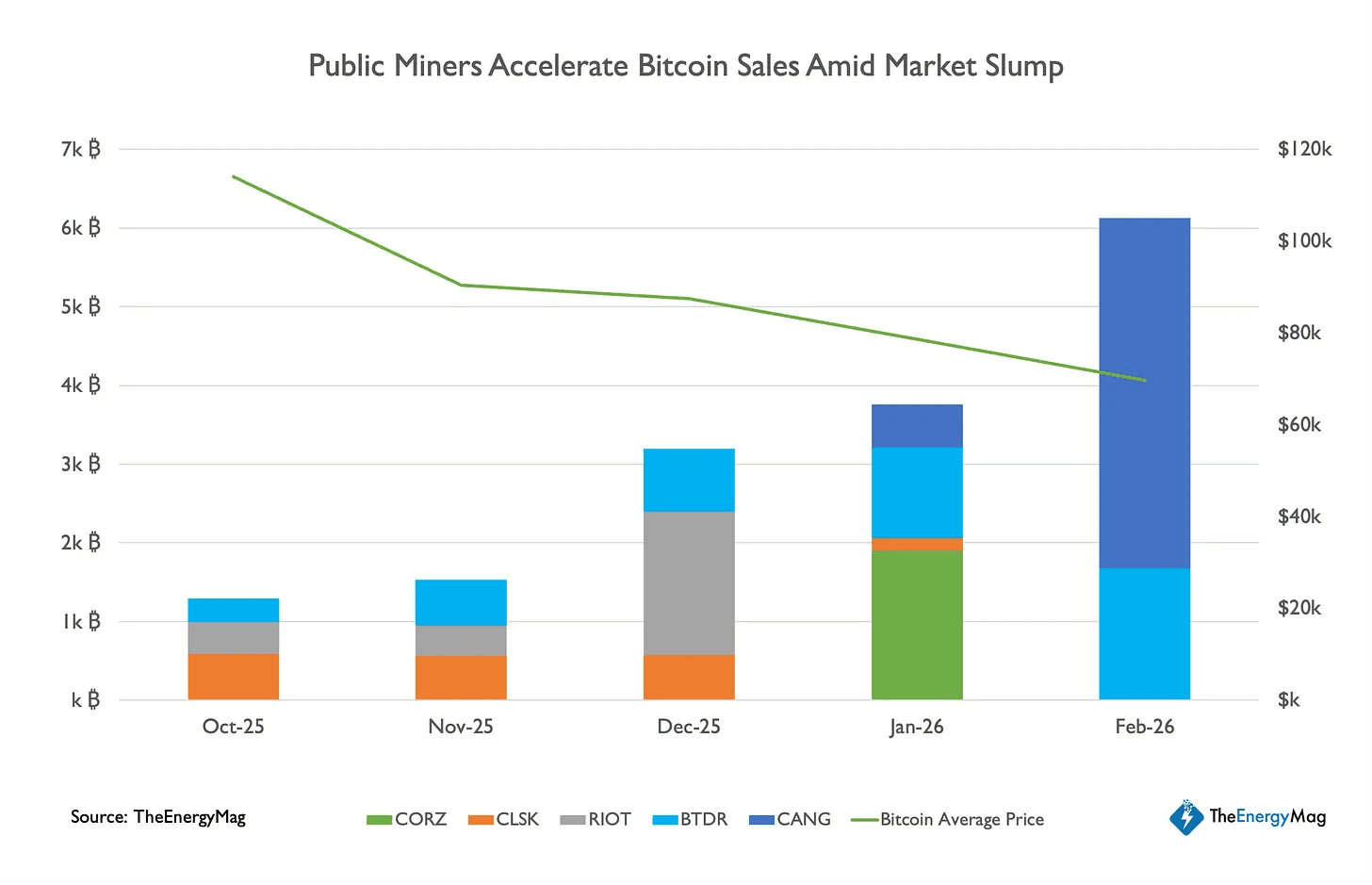
Canaan's recent results illustrate the pressure directly. The Nasdaq-listed miner produced 90 BTC in its latest operational period and received a further 24 BTC from customers, alongside second-quarter revenue guidance of $35 million to $45 million, well below analyst expectations of around $96 million. Canaan is also facing a second Nasdaq non-compliance notice, issued in January after its share price fell below the exchange's $1 minimum bid requirement, with a deadline of July 13, 2026, to regain compliance or face potential delisting.
Two Trends Pointing the Same Direction
Nvidia's bond offering and the Bitcoin mining pivot both point toward the same underlying force: AI infrastructure investment continues to draw capital from every direction. Nvidia is raising more than $20 billion to supply it directly. Miners are repositioning existing assets to serve the same demand. The scale of that capital shift is also reshaping political spending, visible in how a crypto-industry super PAC helped fund a Maryland congressional primary win, and it is reshaping which blockchain networks attract institutional capital, as seen in Solana's recent lead in real-world asset holders. The CLARITY Act moving through Congress could further shape how much of that capital eventually reaches crypto-native infrastructure rather than staying concentrated in traditional AI plays. What remains unresolved is which companies are building something durable on that capital and which are simply following it while their original business keeps deteriorating.
This article was provided by a third party. iRevs does not endorse third-party content and is not responsible for its accuracy or for any product, service, or company mentioned. Readers should do their own research (DYOR).