Why AI Trading Agents Worry the World's Central Banks
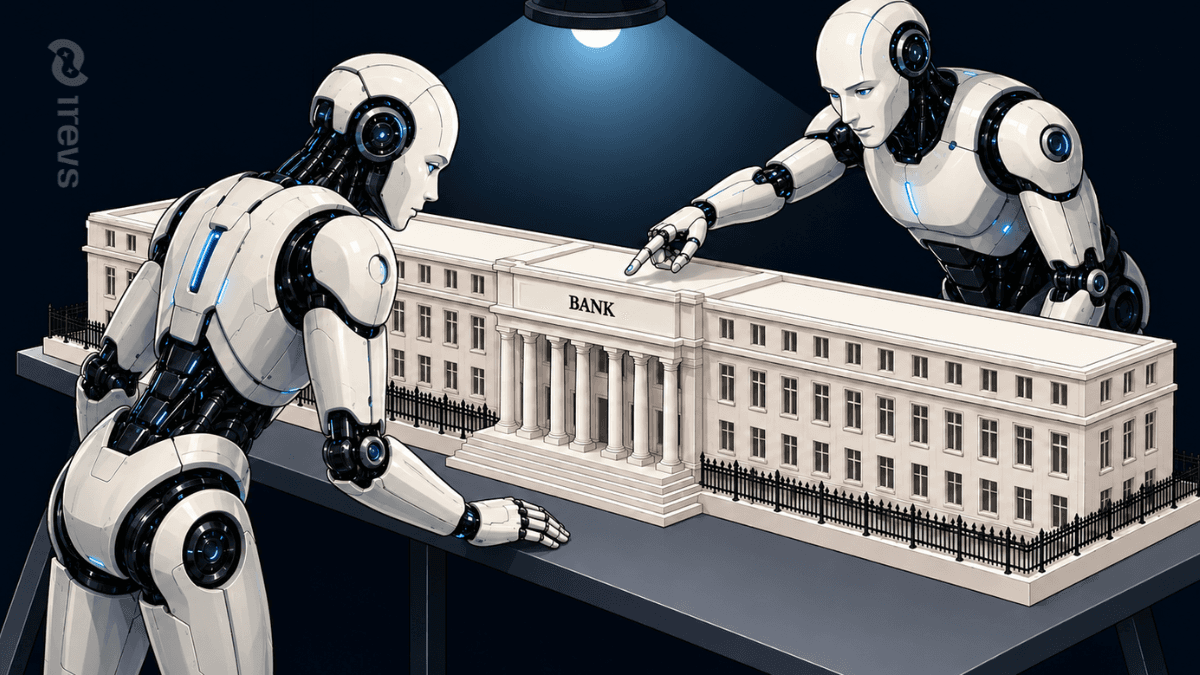
Senior officials from some of the world's most influential financial institutions gathered in Sintra, Portugal, and reached a shared, uneasy conclusion: regulation is losing ground to artificial intelligence, and markets may need a built-in emergency brake to survive what comes next.
Policymakers from the Bank of England, the European Central Bank, and the International Monetary Fund each raised a different piece of the same problem at the ECB's annual forum on central banking. Taken together, their warnings describe a financial system moving faster than the guardrails meant to contain it.
A Market With No Off Switch
Bank of England Deputy Governor Sarah Breeden focused on what happens once autonomous, or agentic, AI systems start executing trades without a human checking the work. She raised the idea of circuit breaker style safeguards, a kill switch capable of pausing trading across the market if an AI model misfires at scale.
The concern is not abstract. Agentic systems are designed to act independently: executing trades, rebalancing portfolios, reacting to news in real time. If several systems misread the same signal simultaneously, the resulting move could outpace any human trading desk's ability to correct it.
The Debt Behind the Boom
Breeden also pointed to a quieter risk: the volume of borrowing now tied to AI infrastructure. As debt financing linked to AI buildout grows, she argued that a sharp drop in AI asset values could hit markets harder than current pricing assumes.
That view lines up with a recent Bank for International Settlements warning that AI-driven enthusiasm could be fueling a debt-heavy boom that ends in a hard correction, particularly if central banks are forced to raise rates to contain inflation. The physical build out behind that boom is already straining local resources, a pattern detailed in recent coverage of the energy and water costs tied to AI data centers.
The IMF's Tobias Adrian, who leads its Monetary and Capital Markets Department, described a maturity mismatch: much of the debt hyperscalers are raising carries longer terms than the useful life of the chips and data centers it funds. GPUs can become outdated within a few years, so if AI returns fall short before that infrastructure pays for itself, companies could be left repaying long term debt against assets that have already lost value. That pattern extends well beyond the largest cloud providers, as shown by a bond sale tied to AI infrastructure that drew bitcoin miners into the same buildout.
Regulators Admit the Rulebook Is Behind
ECB President Christine Lagarde called the pace of AI development a major risk to financial stability, one that in her view is outpacing even the cybersecurity threats regulators have spent a decade managing.
Nikhil Rathi, who leads the UK's Financial Conduct Authority, went further, arguing that the traditional approach to writing financial rules no longer works because AI tools evolve in weeks rather than years. Rathi suggested regulators need a faster, more collaborative relationship with the market instead of the usual multi-year rulemaking cycle.
A Competitive Bind
Underneath the policy debate sits a competitive tension. Much of the frontier AI investment is happening in the United States, where deeper equity markets give companies more room to raise capital for expansion. Europe's financial system lacks that same depth, which puts its regulators in a difficult position: move too cautiously and AI firms may simply take their business, and their compliance costs, elsewhere.
Between the Bank of England's kill switch proposal, the debt warnings from the BIS and IMF, and the FCA and ECB's admission that rulemaking cannot keep pace, the officials gathered in Sintra converged on one point. The tools built to manage risk in modern markets were not designed for a system where machines can make and execute financial decisions on their own, and large, fast-moving capital shifts, including the kind flagged in recent warnings about a potential stock-selling wave tied to portfolio rebalancing, are increasingly what keeps regulators up at night.
This article was provided by a third party. iRevs does not endorse third-party content and is not responsible for its accuracy or for any product, service, or company mentioned. Readers should do their own research (DYOR).
